Modern Suiseki
Sado Akadama-ishi-I, 佐渡赤玉石
Sado Akadama-ishi
Sado Akadama-ishi. It's one of Japan's three most famous stones. Its color, quality, beauty, and reasons, all of these are worthy of being Japan's representative stones.
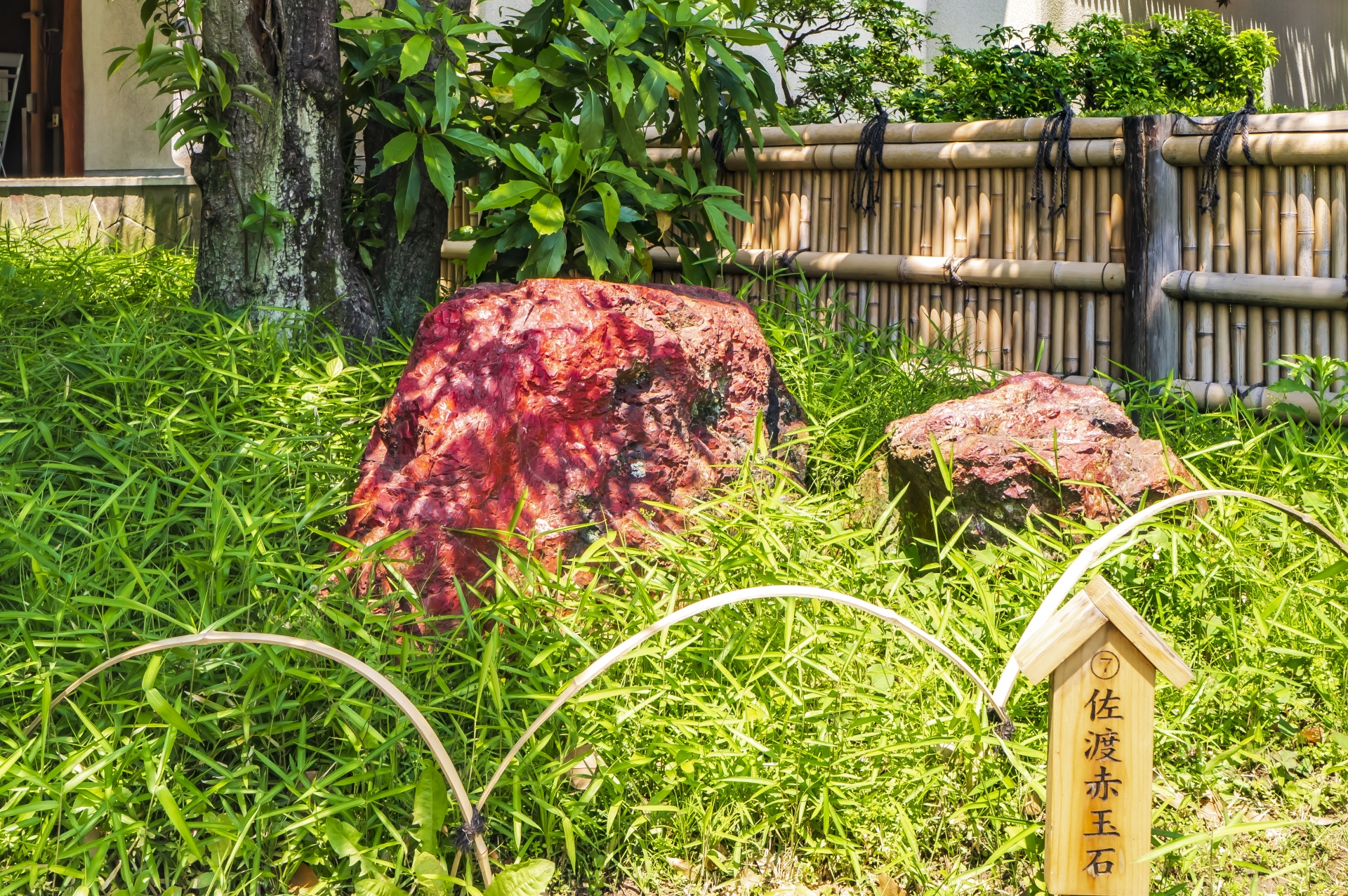
First, its color. As its name, Akadama, red gem, suggests, Akadama-ishi is primarily red.
However, there is a wide variation in color tones, and even those based on red can be closer to brown, vermilion, crimson, or deep red. The most vivid colors are the most valuable, and are sometimes described as the color of dragon's blood. Since ancient times, red and vermilion have been believed to have the power to ward off evil, which is one of the reasons why red jade is so valuable. Although there are many different red stones, it is rare to find one with such an impactful red color as Akadama-ishi.
We must not forget the quality and beauty of the stone. Akadama-ishi is a dense collection of tiny quartz particles that contain iron oxide as an impurity, and is said to be iron quartz. Because it is a collection of tiny particles, it may have cavities and cracks in places, but because it is quartz, it is very hard. In this respect, mineralogically it is the same as jasper, which is made up of tiny quartz crystals. However, perhaps due to the influence of hydrothermal water during its formation, Akadama has a slightly different appearance compared to jasper from other regions. For example, it appears harder and sharper than the Nishiki-ishi found in the Tsugaru region of Aomori Prefecture.
The luster they achieve when polished is also different. The polishing method also plays a role, but when polished, Akadama-ishi has a transparent sheen, almost like a thick coating of varnish. Jasper from other sources rarely achieves this kind of luster. This is another reason why red jasper is more highly valued than jasper from other sources.
By the way, if you brush the weathered surface of raw Akadama-ishi, it will turn red. This is because it is an aggregate of tiny particles, and of course, the red jadeite is not artificially colored.
Finally, a word about its origins: Akadama-ishi has ties to a great hero and a remarkable businessman. It's said to have been presented to Toyotomi Hideyoshi by Mano Toshitaka of Sado; Yataro Iwasaki loved it and displayed it in Kiyosumi Garden; Eiichi Shibusawa placed it in his mansion as a lucky stone to pray for the prosperity of the Japanese economy; and, after being passed down for three generations, it is now located at KABUTO ONE in Kabutocho, Nihonbashi.
In ancient times, there were tubular beads and magatama made from Akadama-ishi, which suggests that Akadama-ishi has something special about it, a power that wards off evil, brings good fortune, and brings good luck.
Sado Akadama-ishi
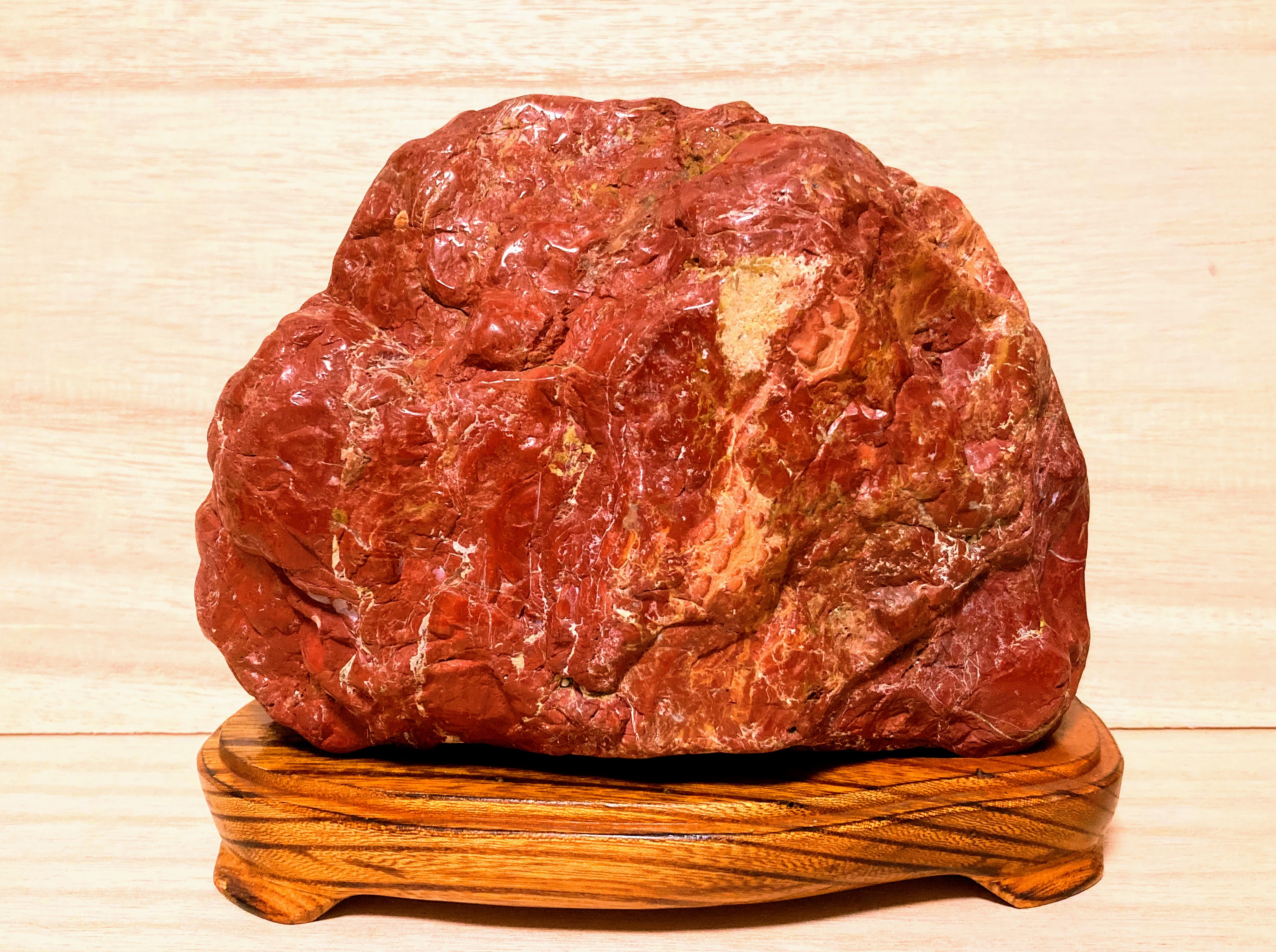
A beautiful red stone typical of Sado Akadama-ishi.
The base is made of zelkova wood, which has been torched with a burner to highlight the grain. It was made by a renowned craftsman from Sado. It has been lightly barrel-polished, combining the roughness of the raw stone with the beauty of the polished finish.
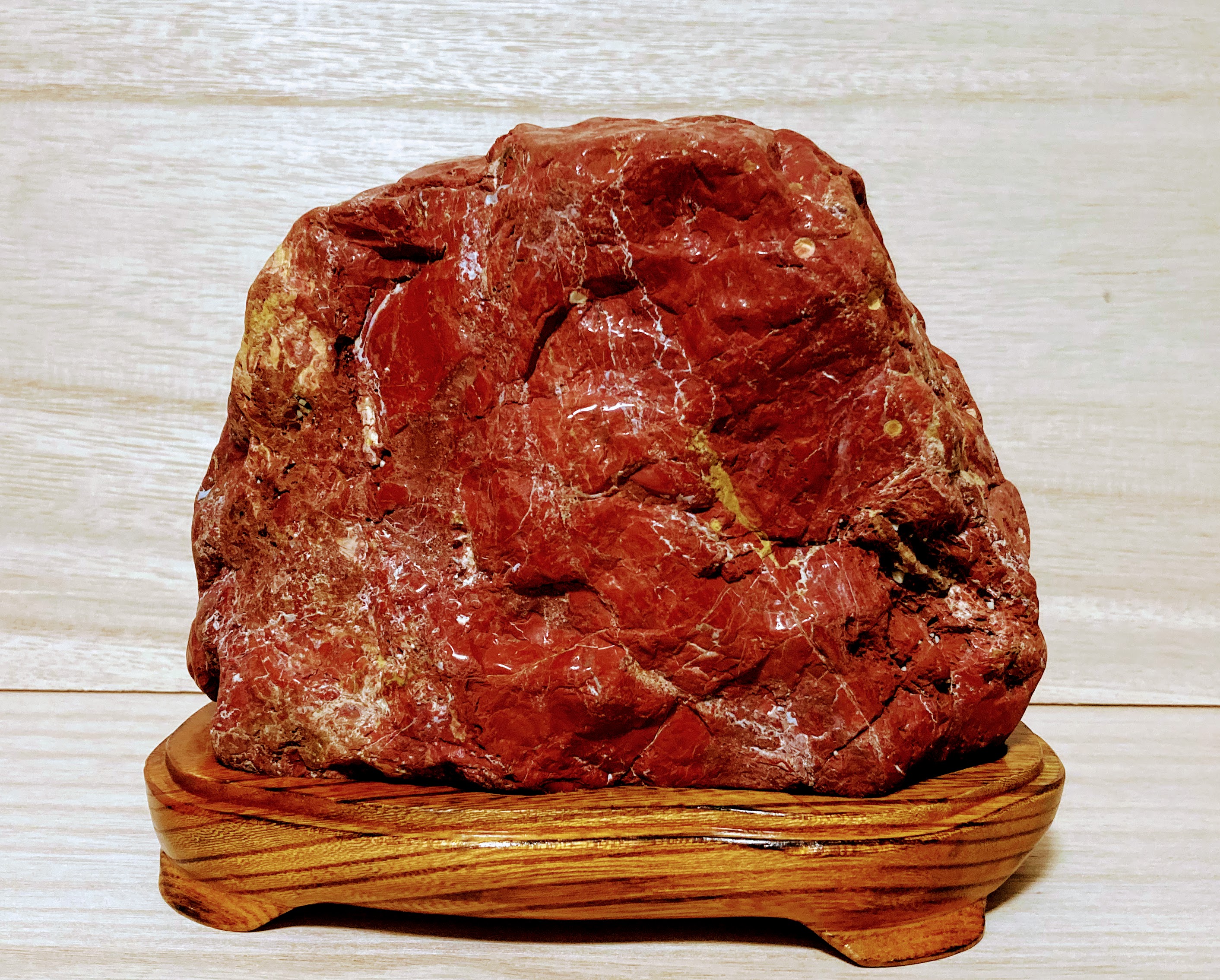
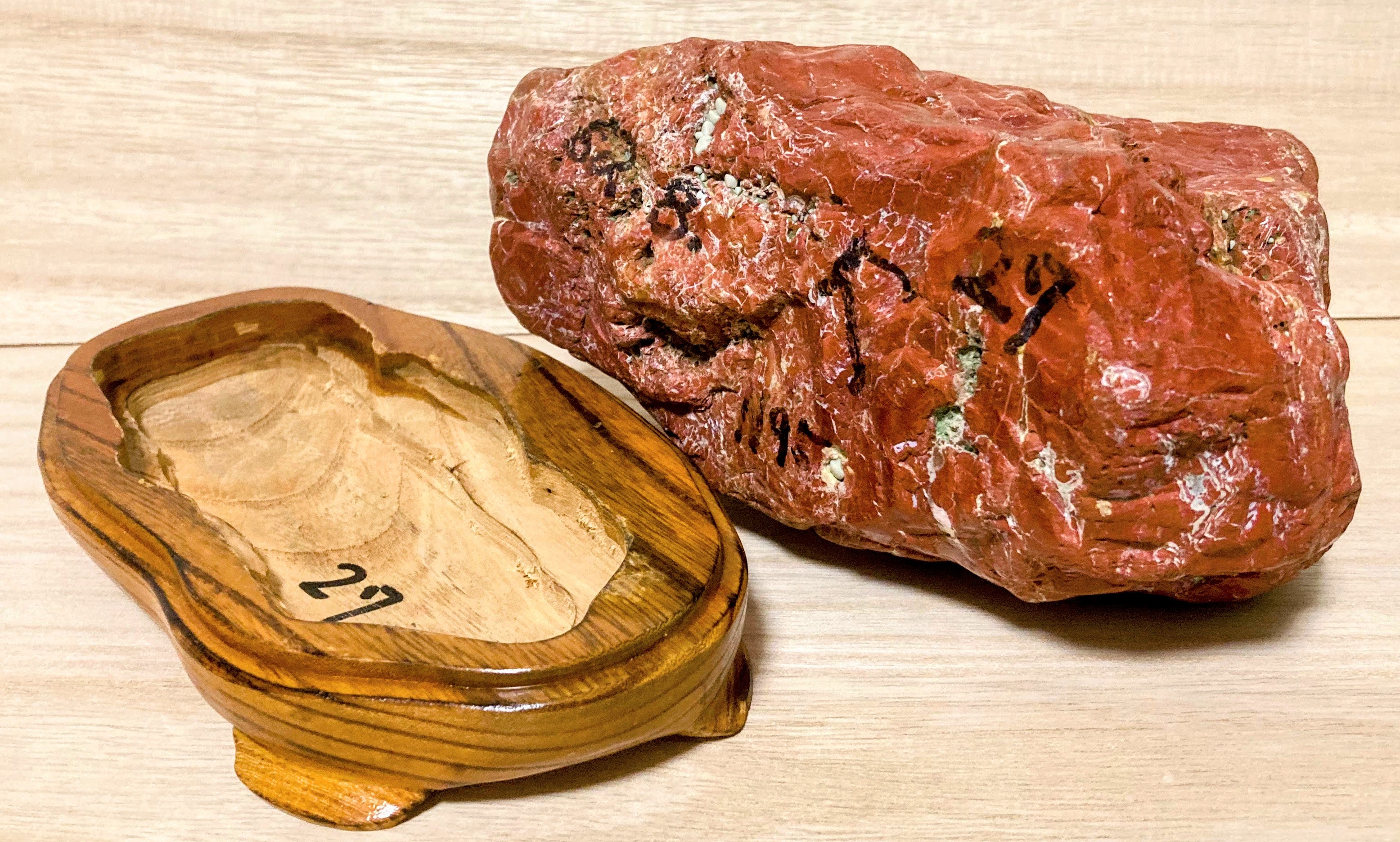
Sado Akadama-ishi
This is also Akadama-ishi from Sado that has been barrel polished. Tucked into the gaps is agate, which acts as an abrasive.
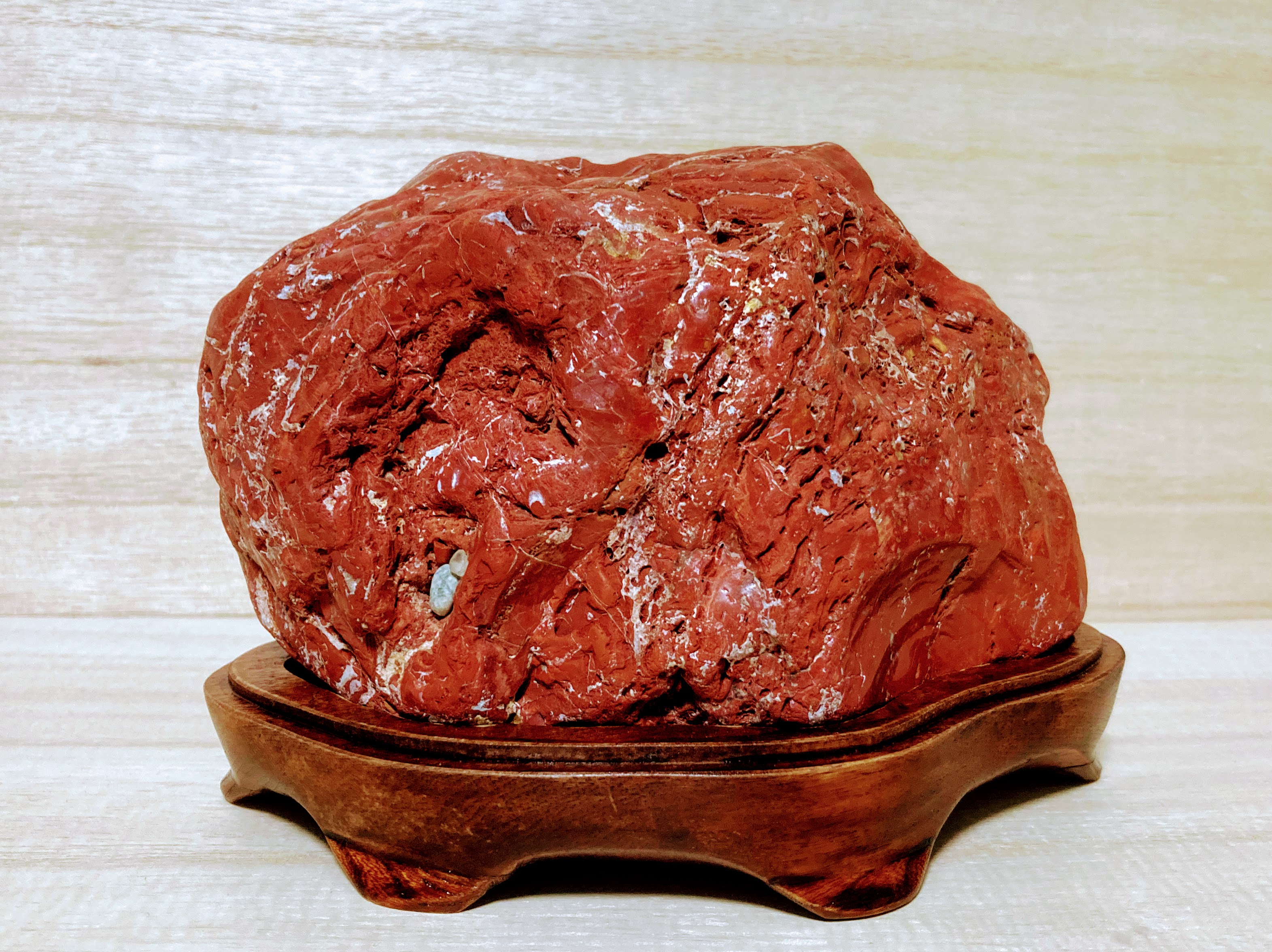
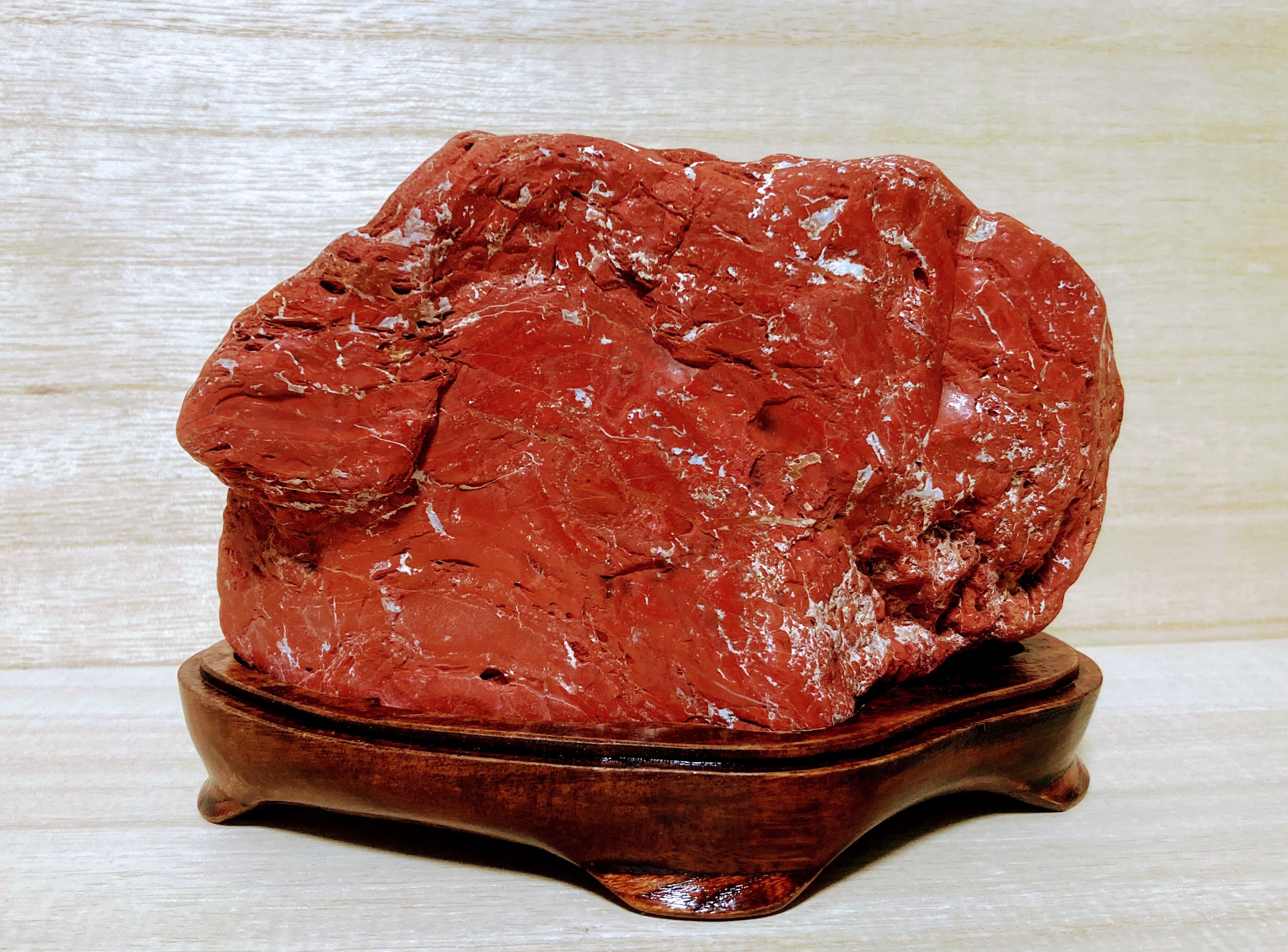
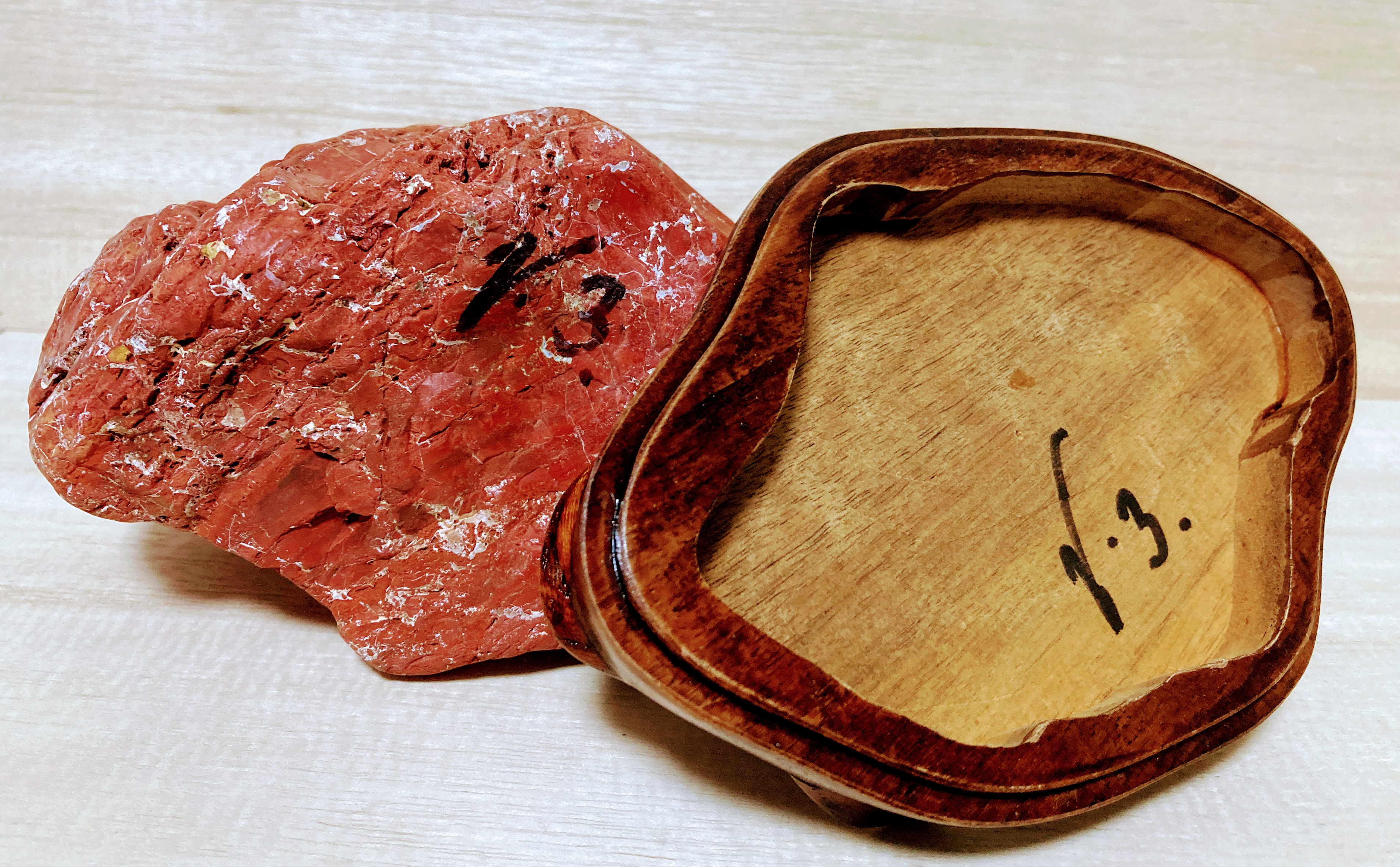
Sado Akadama-ishi
Sado Akadama-ishi that has been polished completely. Tiny cavities can be seen in places, as if they were filled with pores.
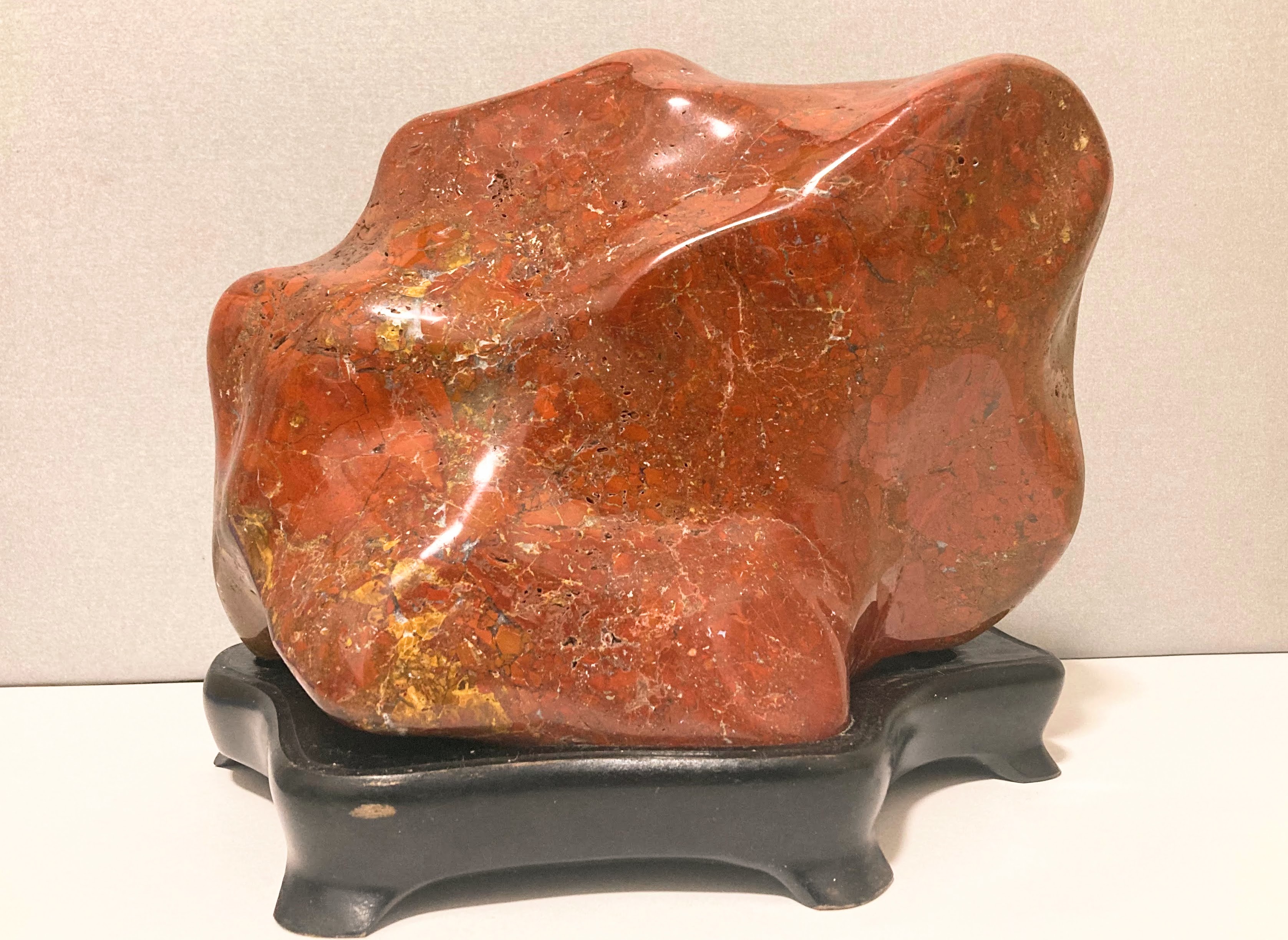
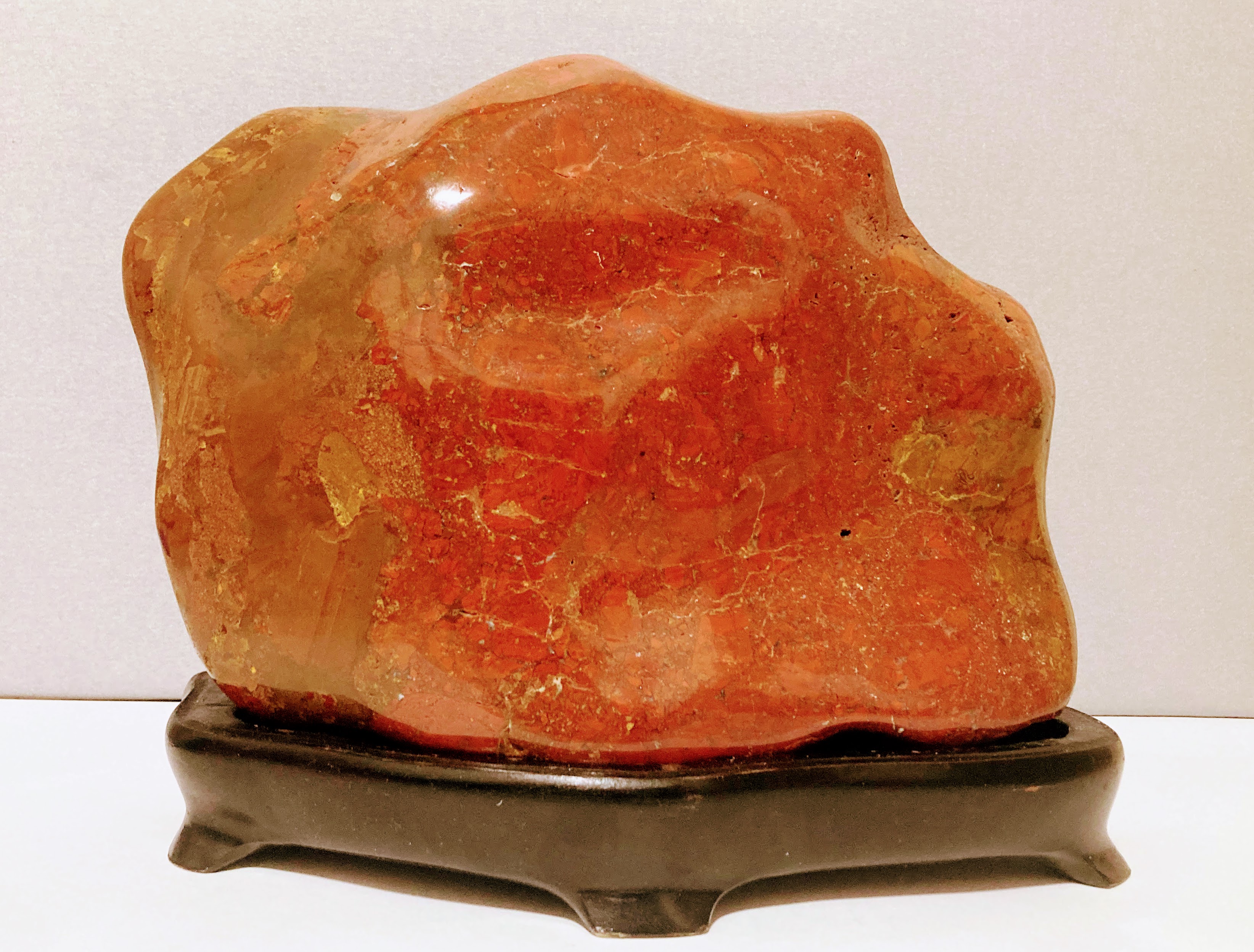
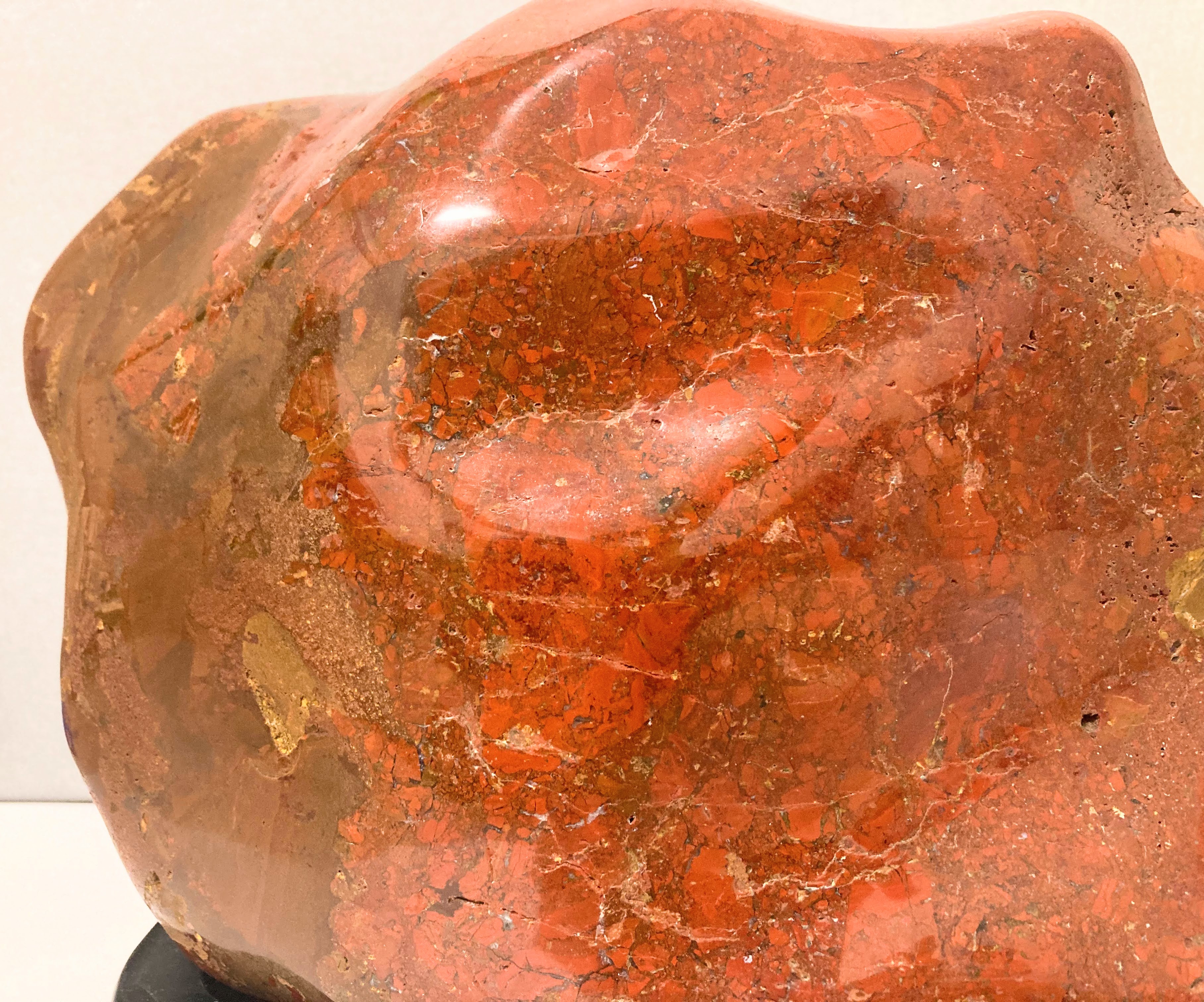
Because Akadama-ishi is a dense collection of tiny particles, there are areas that appear to have gaps or mosaic-like fragments. This Akadama-ishi has beautiful yellow patterns in places.
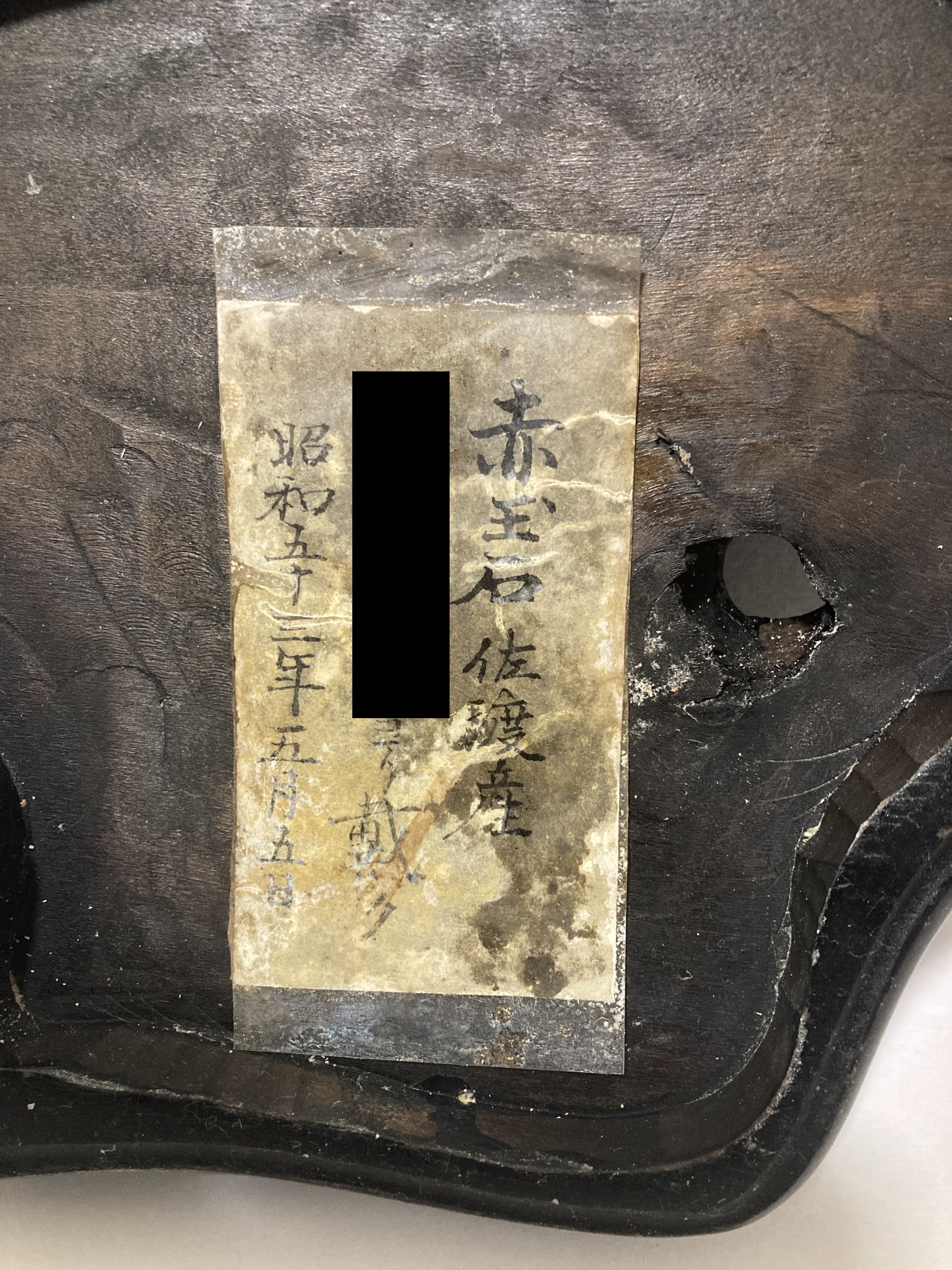
Sado Akadama-ishi
As its name suggests, Akadama-ishi, red gems, is primarily red, but there are variations in the shade of red.
This stone is close to vermilion, and its rough polishing creates a matte finish that complements it well.
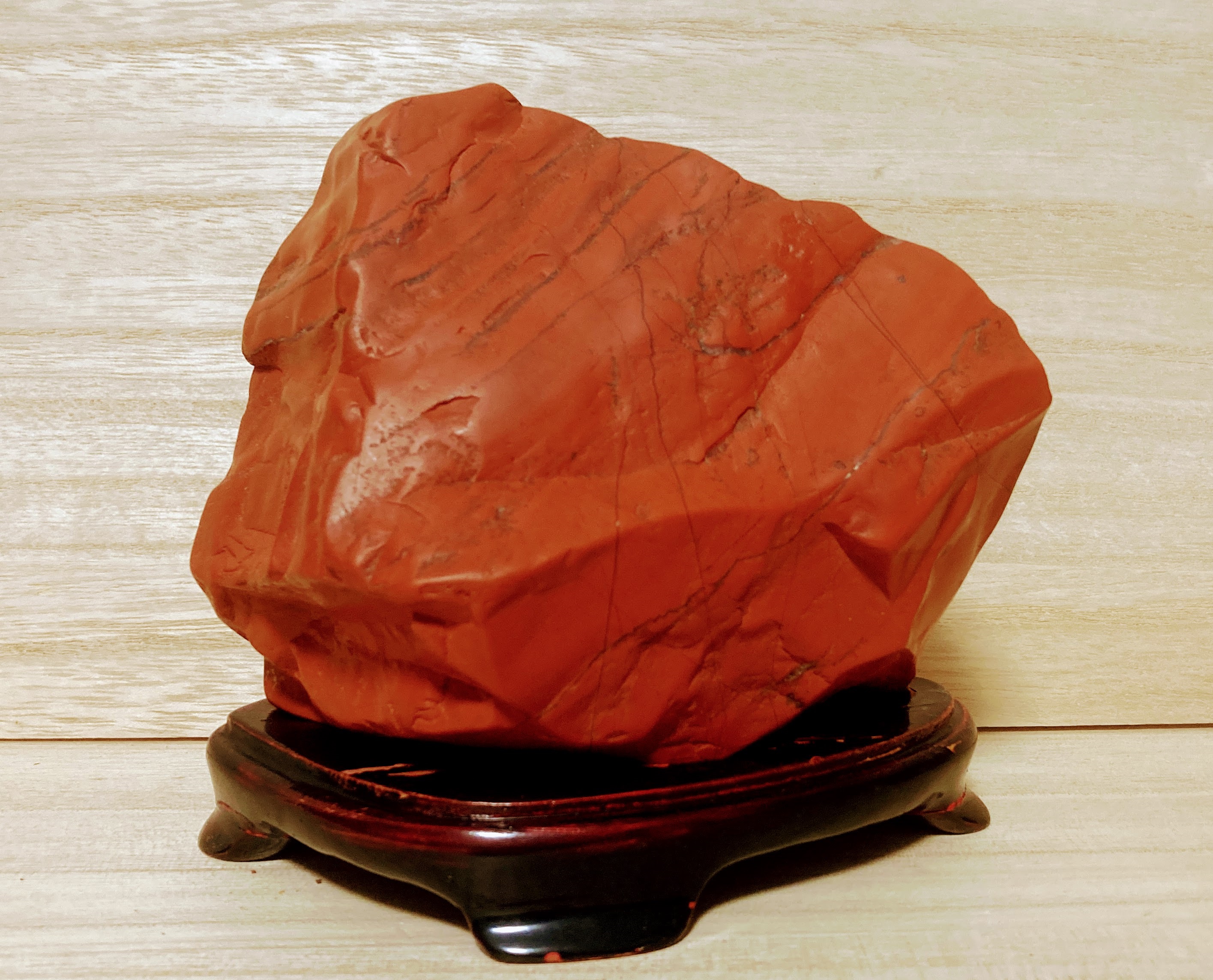
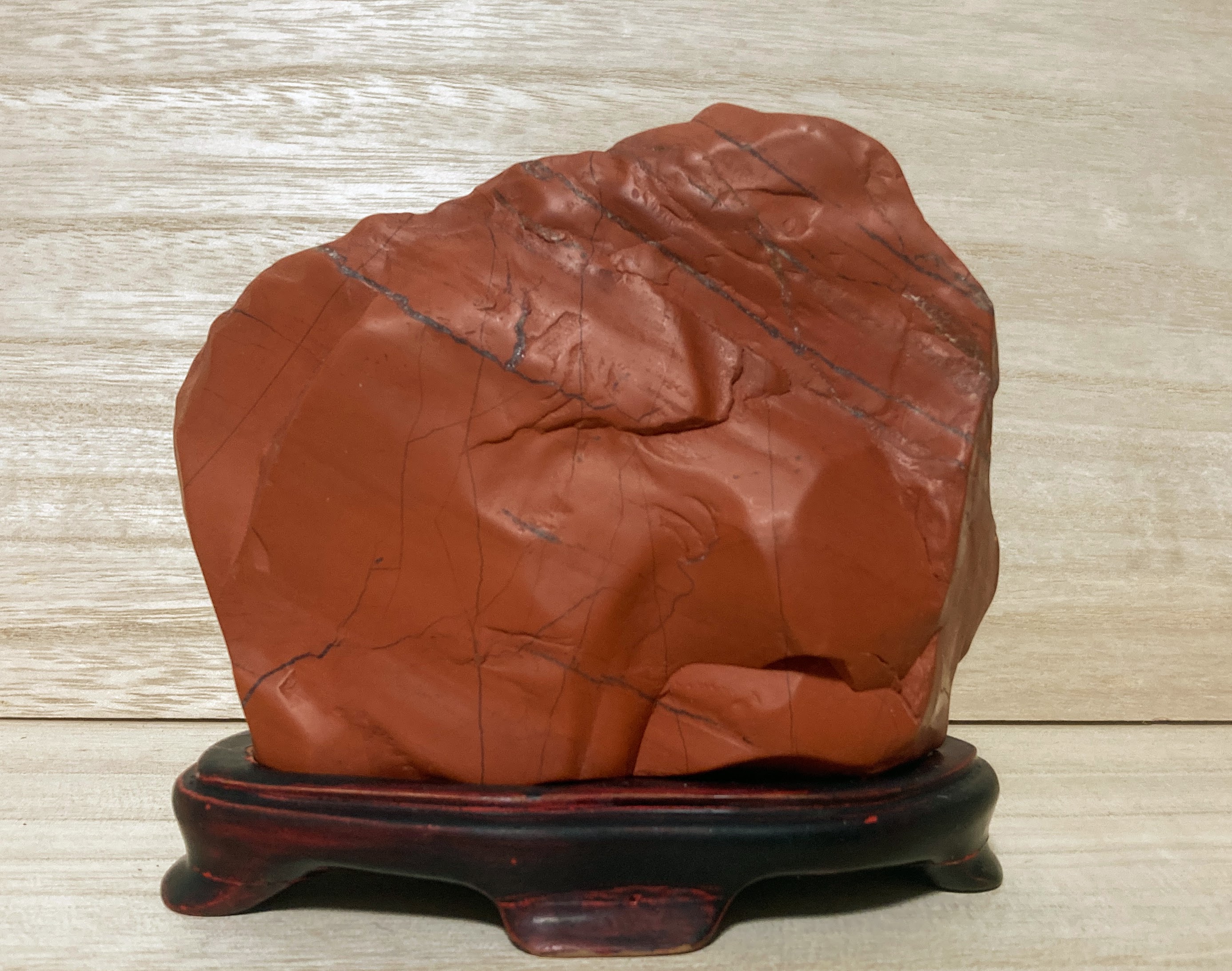
Sado Goshiki-ishi
Sado Akadama, as the name suggests, is red, but there are also yellow varieties. And sometimes red and yellow are mixed together. In these cases, the stones contain intermediate colors between red and yellow, and are therefore called Sado Goshiki-ishi. (There are quite a few suiseki stones called Goshiki-ishi, but most are only two or three colors.)
On the other hand, while this may have been the case in the heyday of suiseki, the vibrant beauty of the solid red of akadama cannot be matched, and the name Sado Goshiki-ishi is no longer used.
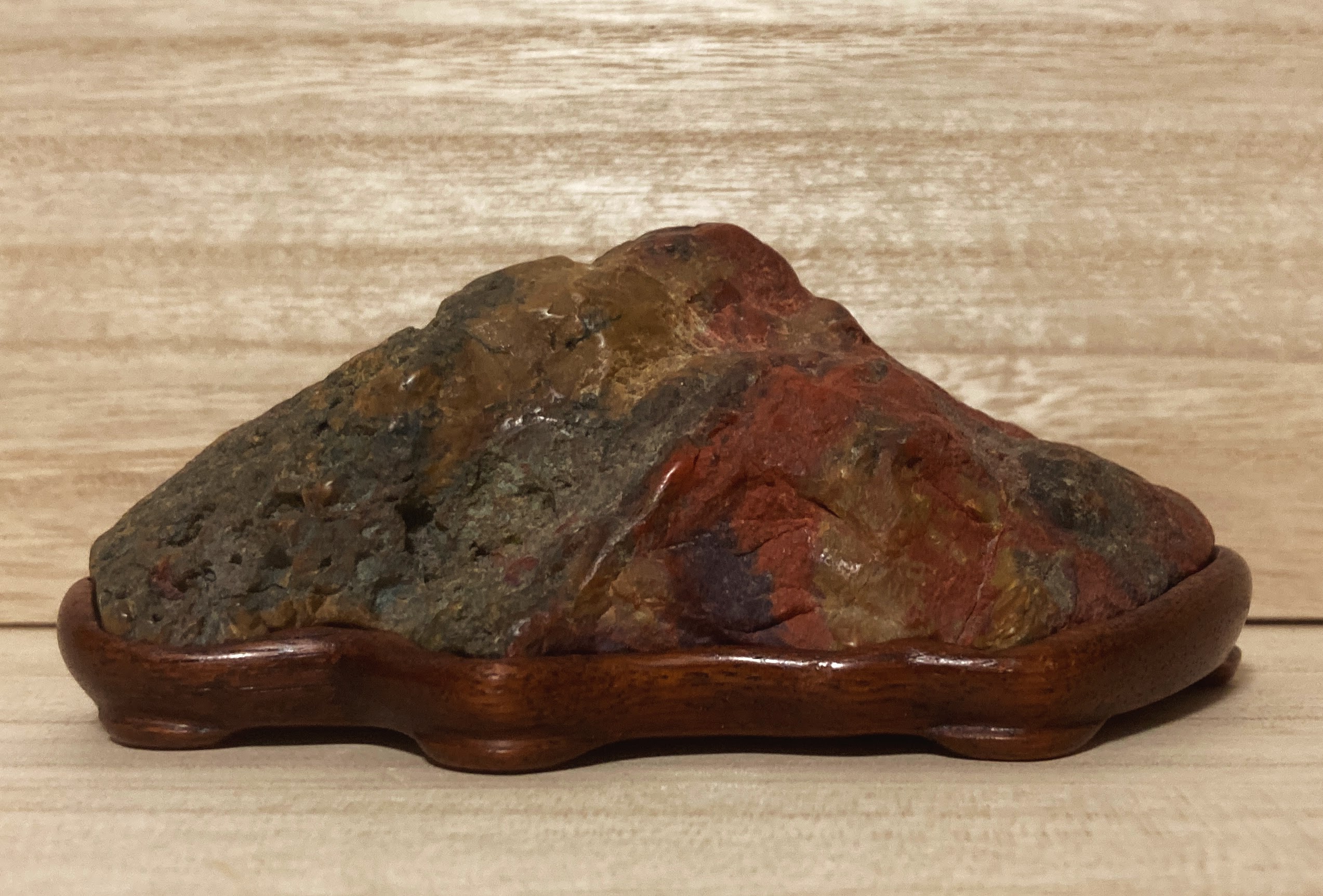
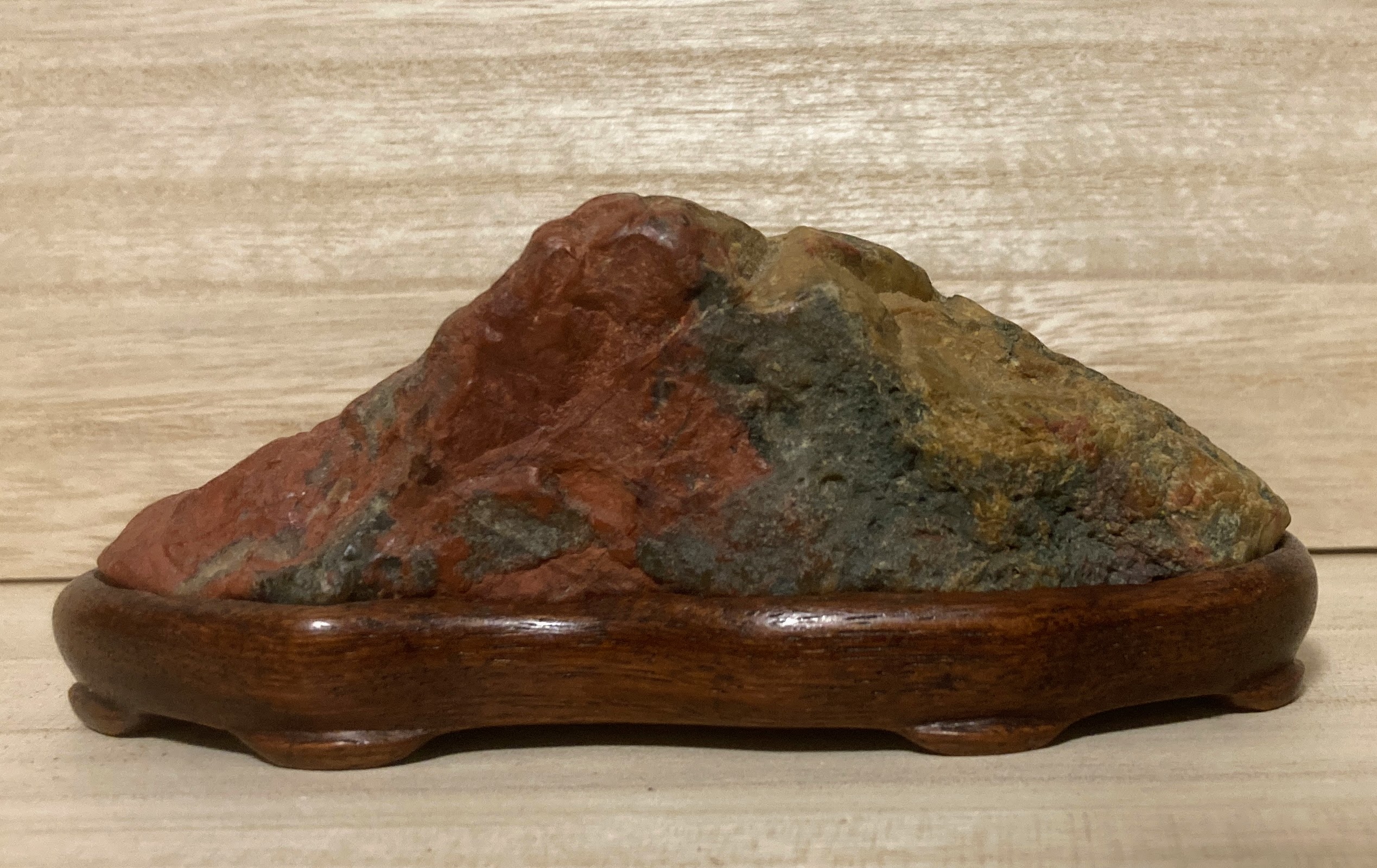
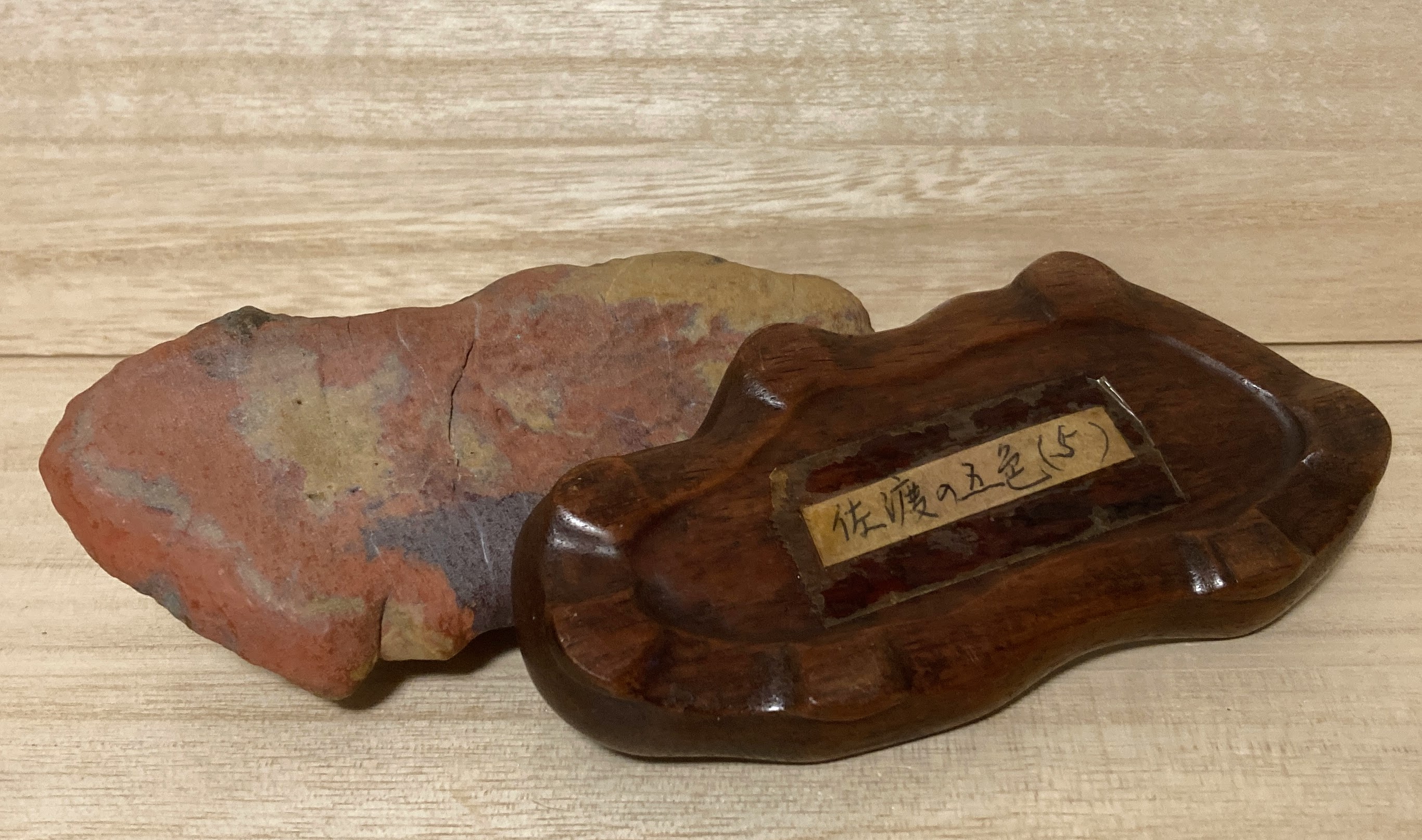
The bottom of this stone has been cut off and sandblasted to give it a natural look.